
Noctua NL-LC1-36 AIO Water Cooler Review
Author: Dennis Garcia
Introduction
For years the premier PC cooling solution has been water either as an assembled DIY cooler or the more readily available AIO. With water you a higher thermal capacity and, if sized correctly, you will get near ambient system temperatures under light loads. Of course, with anything great you will always have skeptics, the most common response I get is “I had a friend with a catastrophic failure” or the “water and electronics don’t mix” argument. Both are typically just ignorance for new ideas and, they likely still spread their thermal paste because mechanical compression just isn’t good enough.
With the mainstream adoption of AIO watercoolers another complaint has surfaced that actually holds some real-world value. “Why is there no Noctua edition watercooler?” As we know Noctua builds some of the most efficient coolers on the planet both in thermal capacity and noise suppression. They have pioneered the development of truly silent rotating air movers which have been adopted in most electronics from GPU coolers, power supplies, cases, cpu coolers and even 3d printers.
Well, now we can add the AIO watercooler to the list.
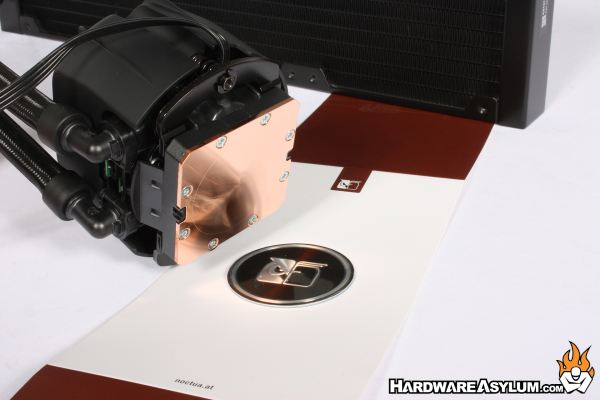
In this review we will be looking at the Noctua NL-LC1-36 AIO. This is what I would call the Noctua edition AIO since it features Noctua NF-A12x25 G2 fans and Noctua specific mounting hardware but, is still a basic Asetek Emma V2 360mm AIO under the hood with a few tweaks along the way.
I was introduced to this product during Computex 2026 where I was presented with a visual overload of charts and graphs outlining the technology and testing that went into converting a standard stock AIO into a product worthy of the Noctua name.
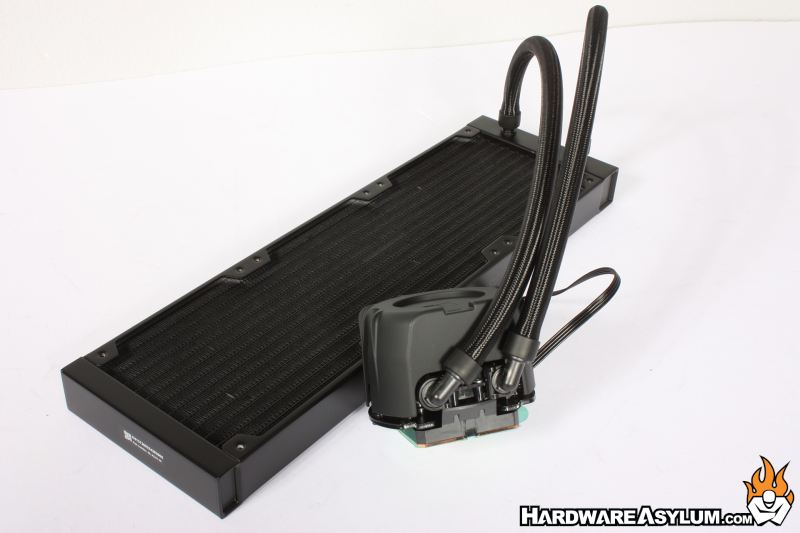
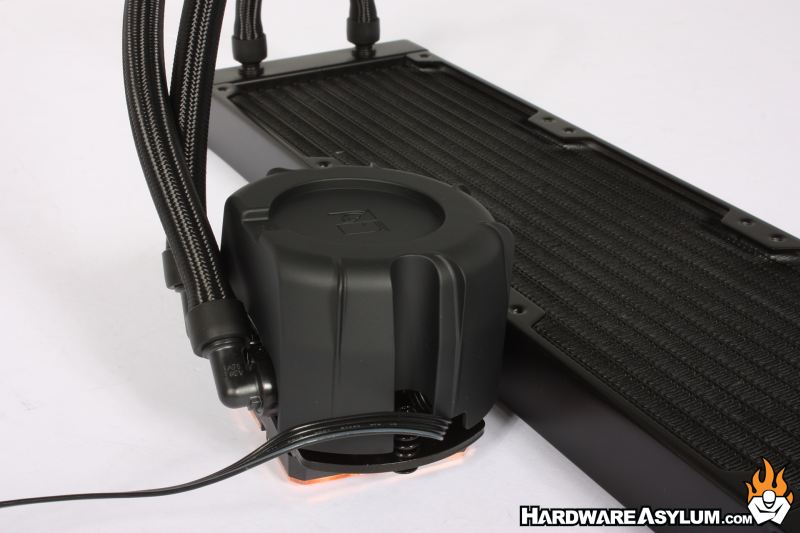
The most notable of changes is the pumpblock. As many of us know, AIO watercoolers are already extremely silent, the motor used to move water through the system is super small and spins around 4000 rpm. When emersed in water the impeller makes very little noise but is still subject to harmonics and vibration, especially if there is air in the system. (note: there is always air in an AIO, that keeps them from exploding during transit and is needed for them to operate efficiently)
To address the existing “noise” Noctua has created an elaborate cover that will fully encase the pump block. This noise isolation barrier effectively blocks the high frequency harmonics that are typically present and changes the typical noise profile.
You can see this acoustic barrier in this photo showing the hoses attached to the pump block. Between the hoses there is a small pcb and switch. Above that is the acoustic barrier.
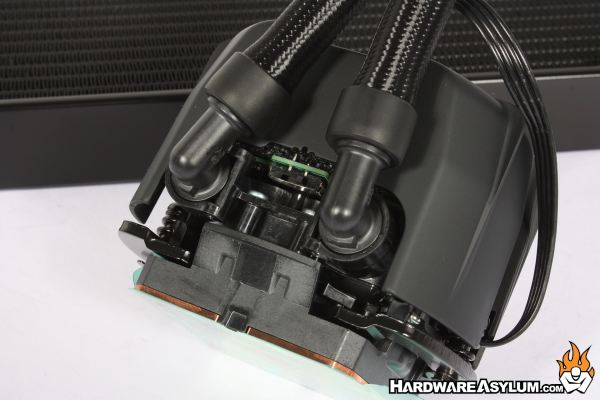
Speaking of switch, the Noctua NL-LC1 comes with a three-position pump limiting switch. From the factory the pump is set to “Quiet” mode and will limit the pump mother to around 2000 rpm. In the middle position “Balanced” the pump will settle around 2500 rpm and in high-speed mode “Manual” the pump will spin at 3500 rpm and is moving the most amount of fluid.
In terms of sound, the AIO pump is nearly silent in the Quiet mode and is how the benchmarks were run. I rarely noticed the pump during the benchmarks however, in the performance Manual mode I can hear the little motor thumping away from across the lab.
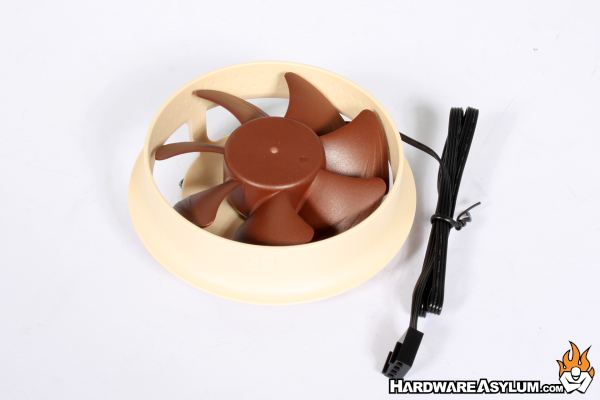
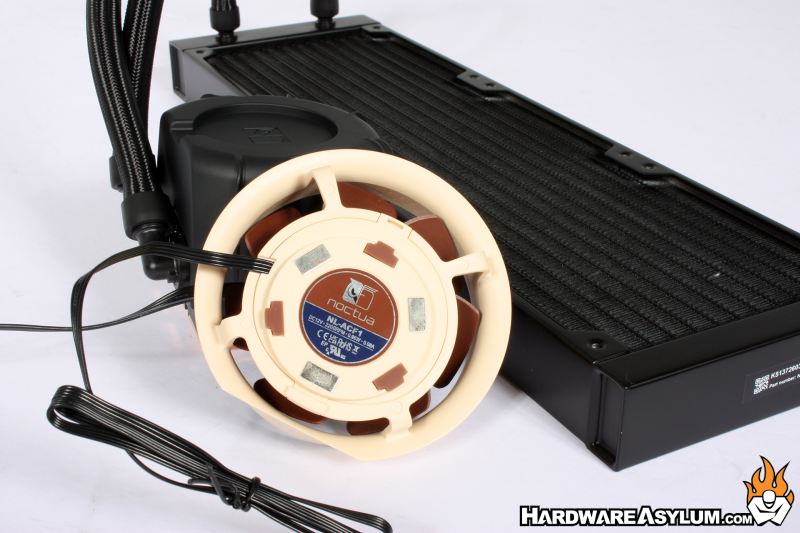
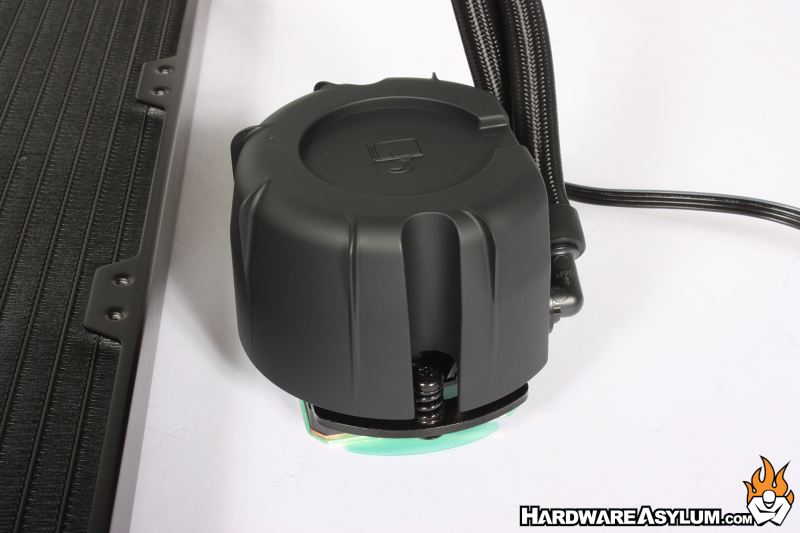
While there is little Noctua can do with the pump block design the new cover does allow them to install another new Noctua product the NL-ACF1 Auxiliary Cooling Fan. This fan has a magnetic base and will sit directly atop the new pump cover and deliver airflow around the critical motherboard VRM and system memory.
Cooling the motherboard VRM has always been critical for overall system performance and stability but, with the advent of watercooling there is very little airflow that reaches these critical components. With the ACF1 installed you will get a steady flow of air which can increase system stability and even reduce system noise in the process.
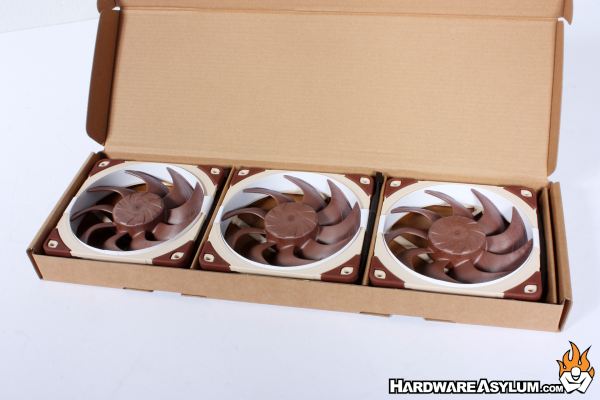
The final Noctua contribution needs no introduction and is the NF-A12x25 G2 fans. These have become a stable in every Noctua edition product from the standard Noctua aircoolers to boutique products such as the Antec Flux Pro Noctua Edition case.