
Cooler Master V8 ACE 3DHP Black Intel Version Heatsink Review
Author: Dennis Garcia
Introduction
You don’t see many reviews of actual CPU heatsinks anymore, not because they are going away but rather that the innovation has really slowed. For instance, the Cooler Master Hyper 212 has been extremely popular as a low-cost high-performance cooler that budget builders and PC PartsPicker zealots flock to as the perfect OEM replacement. Thing is, that cooler hasn’t changed in 20 years, it is the same four heatpipe 120mm design it always has been with the occasional refresh to add color and RGB lights. As they say, don’t mess with a good thing.
In this review we will be looking at the “return” of the Cooler Master V8 and introduction of the 3DHP (3D Heat Pipe technology). 3DHP is part of a new hybrid heatpipe core designed to increase performance while also keeping the cooler small. Innovation in the V-series is a key feature of the products. Back in 2010 the highlight was a new way of setting the heatpipe arrays as a better way to spread thermals across the radiator using different length heatpipes. Cooler Master took the design to the extreme with the V10 by using a massive heatpipe array backed by a single TEC module as a way to supercharge system cooling.
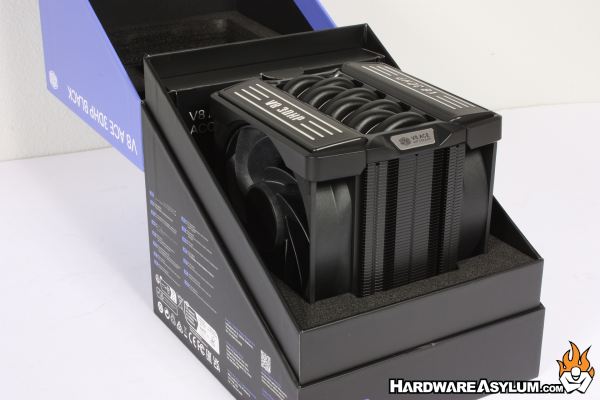
This is also not the first time that Cooler Master has released a hybrid heatsink design. In 2012 The Cooler Master TPC 812 was released and featured a vertical vapor chamber that sat across the top of the heatpipes. This vapor chamber was designed to soak up excessive heat under at high loads and increase thermal capacity and performance.
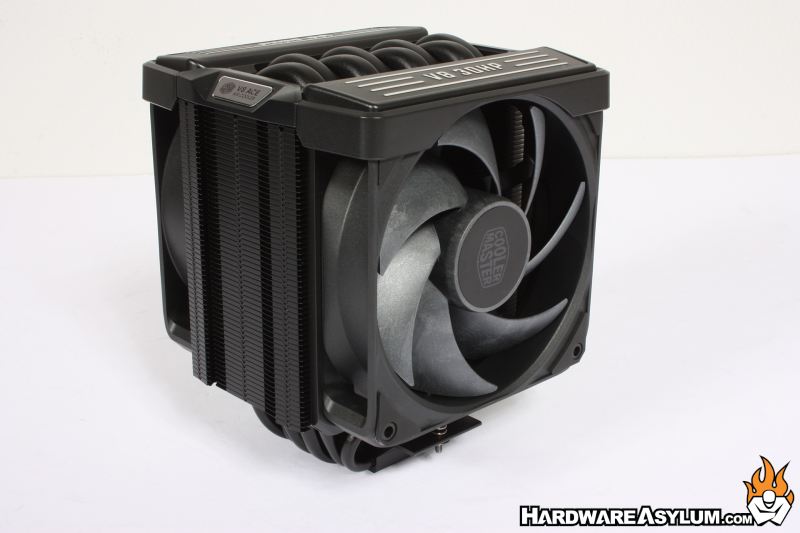
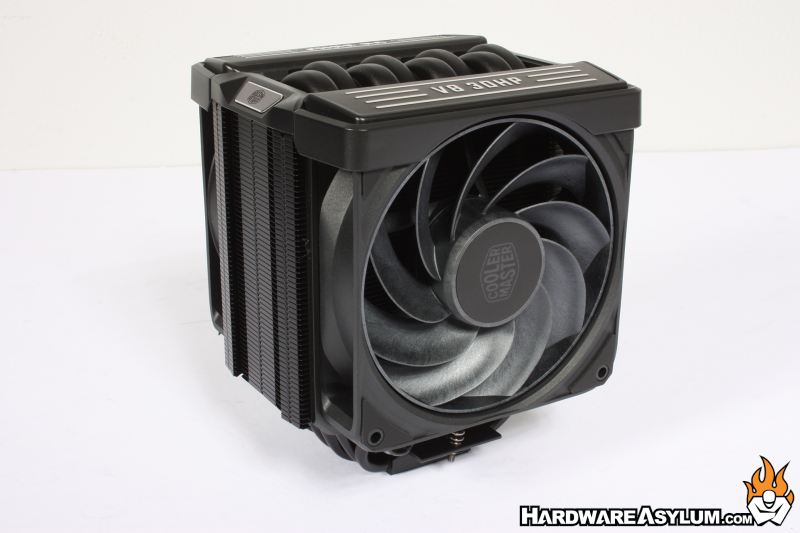
The new V8 ACE has a very similar design however, instead of using a full width vapor chamber the design is broken up with only two individual 3DHP tubes moving vertically near the center of the heatsink radiator to increase capacity. In theory this should effectively raise the supported thermal capacity without increasing the overall radiator dimensions.
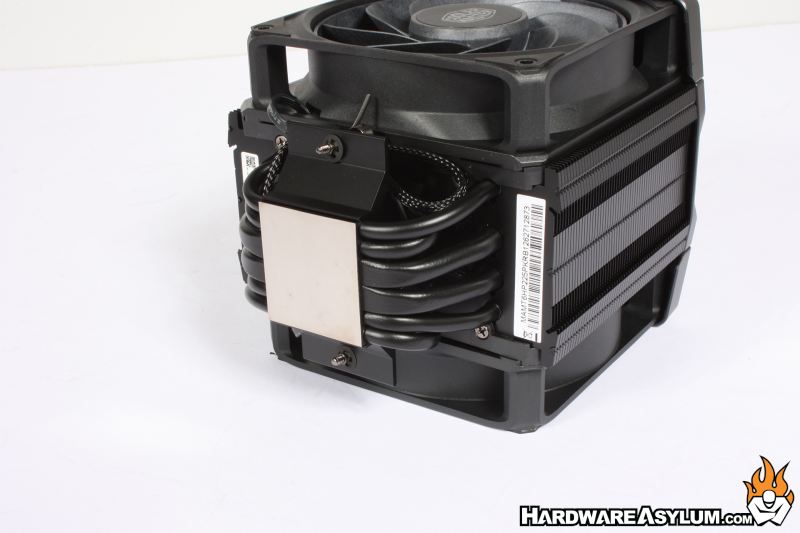
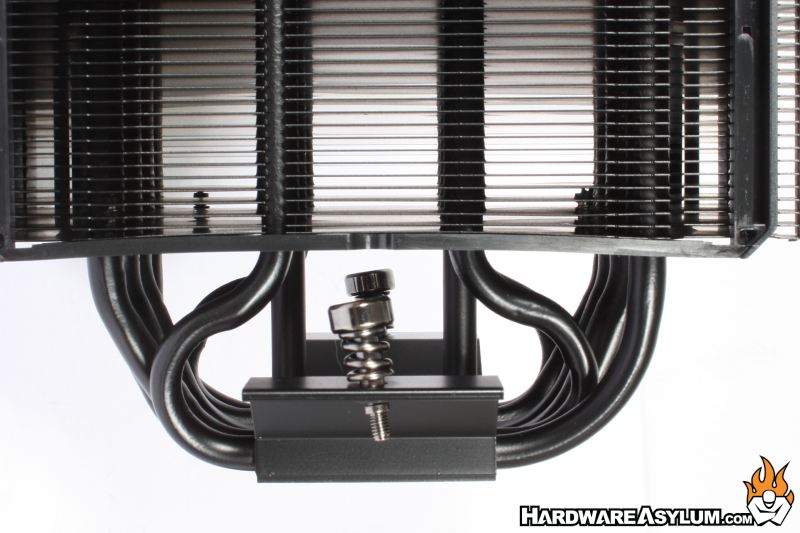
What I like about modern heatsink designs is the attention to detail. On the V8 ACE both fans are installed without the typical wire springs but use a slide locking system. This allows you to remove the fans by sliding them upwards and reinstall them by doing the reverse. This system is integrated into the decorative top cover and part of the pre-installed fans.
One side benefit to the sliding fan installation is that you can easily adjust for memory clearance issues by just clicking them upwards a notch or two.
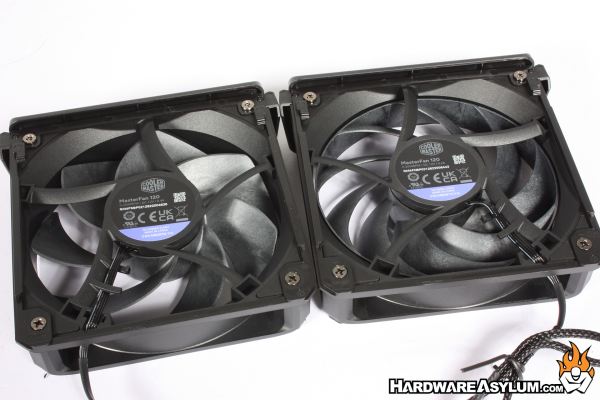
Speaking of fans, these are very unique. On the intake size you will find a 120x30mm Pressure fan to ensure that air is moving in the right direction. The exhaust fan is also 120x30mm as a standard reverse flow fan. Sadly, this reverse flow fan is also a “ring” fan and yet still made from high strength LCP material. If you look closely, the fans also are asymmetric in power and RPM, mostly to reduce harmonics without any performance impacts.