
MSI MEG X870E ACE Max Motherboard Review
Author: Dennis Garcia
Board Layout and Features
The motherboard layout is following a trend that have noticed with certain MSI motherboards and largely been adopted by other board makers. For the X870E ACE Max the layout is almost a mirror of the Z890 design down to the placement of M.2 slots, heatsink sizes and number of expansion slots.
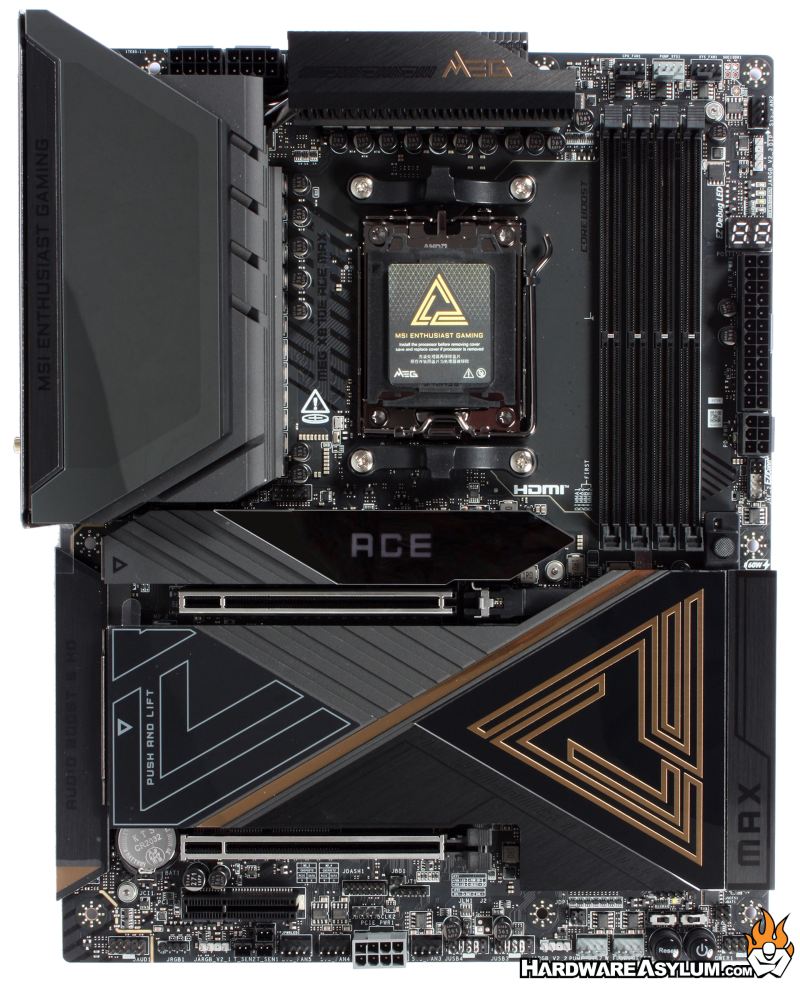
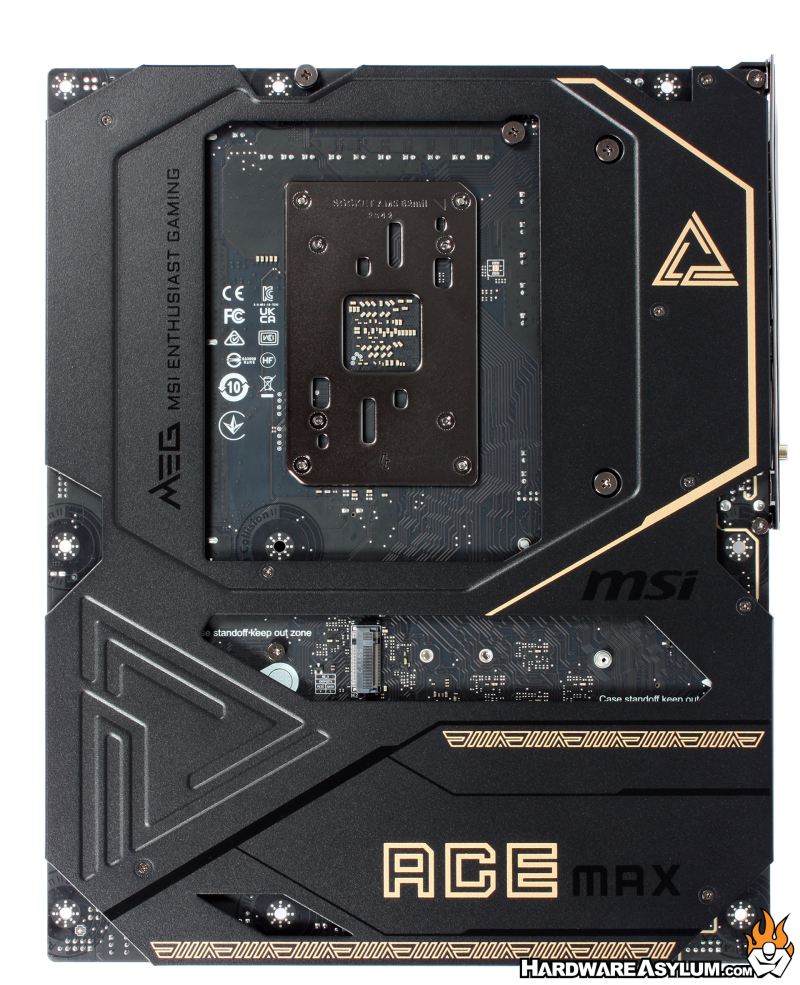
Flipping the board over shows us something really quite special. In addition to the full coverage back plate, we are given access to another M.2 storage slot. It is not uncommon to have reverse mounted M.2 slots but, that is normally reserved for space limited designs such as the MicroATX and MiniITX motherboards.
Sadly, with the backplate installed we can no longer see how the various expansion slots are wired up but, with modern motherboards that is less of a concern considering that Multi GPU has been reserved almost exclusively for the Workstation and Server market.
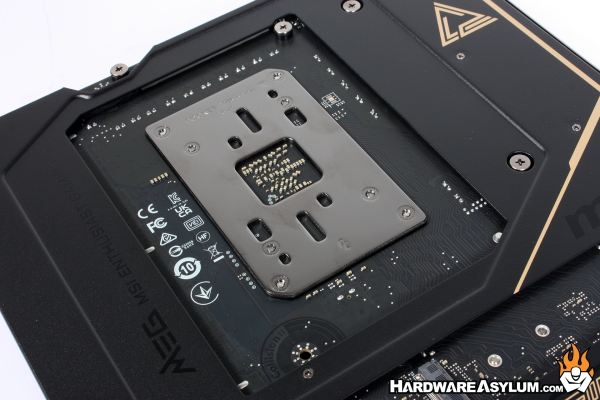
The large opening in the backplate is to allow access for heatsink installation. What humors me the most is that almost all of the heatsinks you will use for the AM5 platform use the existing backplate making access to install heatsinks a bit moot. However, it is still nice that it exists.
The VRM found on the MEG X870E ACE Max is not for the faint of heart. Theare are a total of 21 power phases shown around the CPU socket consisting of 18+2+1 digital power phases.
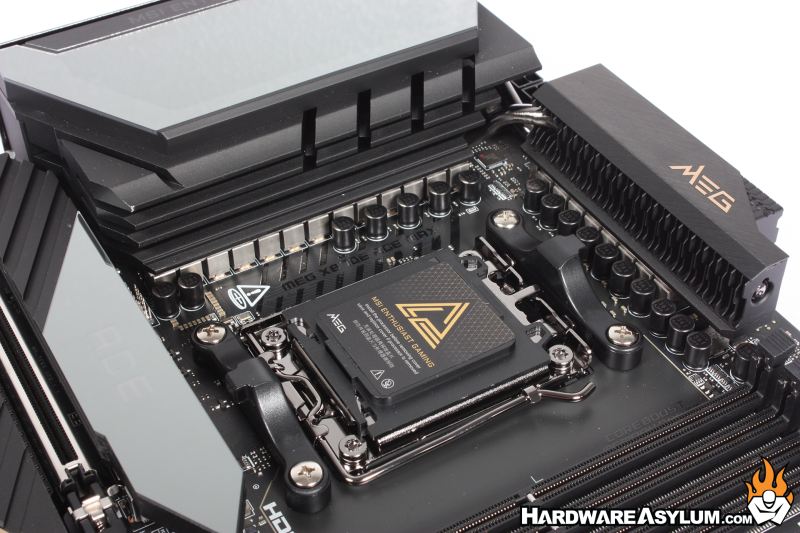
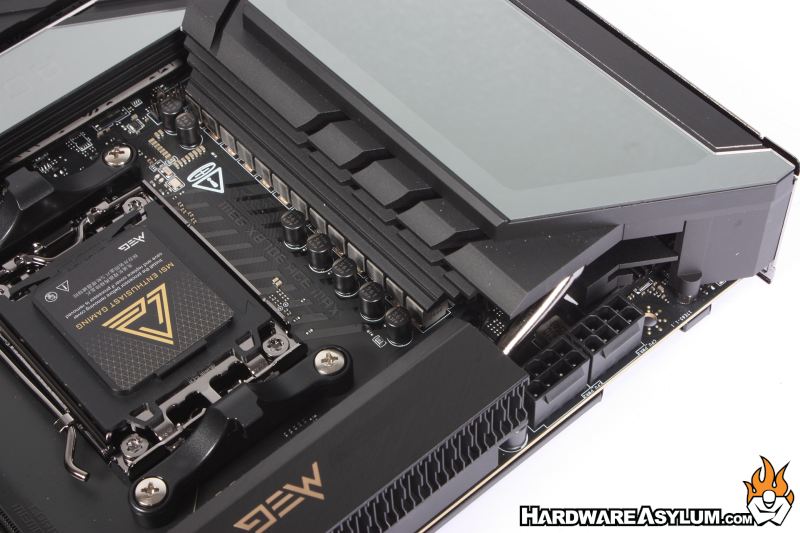
Dual power connectors supply power creating a 110A Smart Power Stage to control 21 phases of CPU Vcore and SPS, 2 phases for SOC Power and a single phase Misc items around the CPU socket.
The dual power connectors are located in the upper right of the PCB near the memory sockets with plenty of room for cable access. One thing I find especially nice about the MSI MEG X870E ACE is that the VRM cooler has been built using the FROZR Design which was made popular by the extremely efficient heatpipe cooling arrays found on high-end MSI Gaming and Overclocking graphics cards.
You can see the Wavy fin radiator and heatpipe array near the top of the motherboard connected to the extremely dense heatsink block adjacent to the primary motherboard I/O