
LevelPlay Combat Liquid 360HUD AIO Cooler Review
Author: Dennis Garcia
Combat Liquid 360HUD Layout and Features
Very little has changed in the overall design of AIO coolers. They are still just a closed loop watercooler with a cold plate that attaches to the CPU, some liquid to move heat from one place to another, a radiator to keep things cool and a pump to make sure everything moves around.
The innovation comes with small tweaks at each one of these points. Out of the box I was surprised to see that the cooler comes pre-assembled with three 120mm fans attached to the radiator, fans linked together and the pump block ready to go.
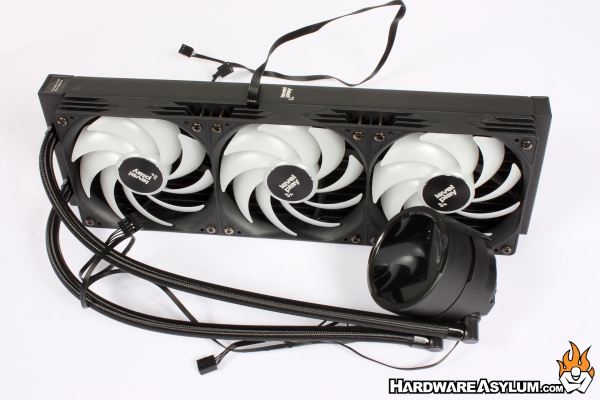
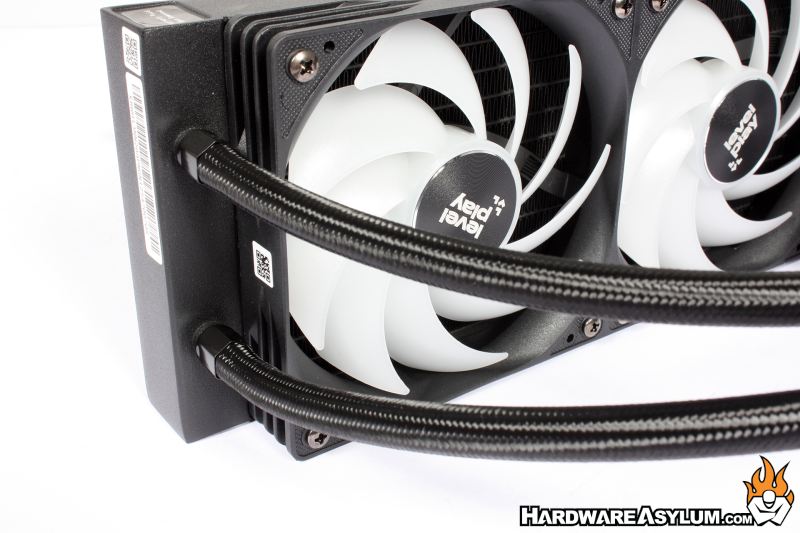
Hoses are average in terms of thickness with a cloth braid for decoration and friction resistance.
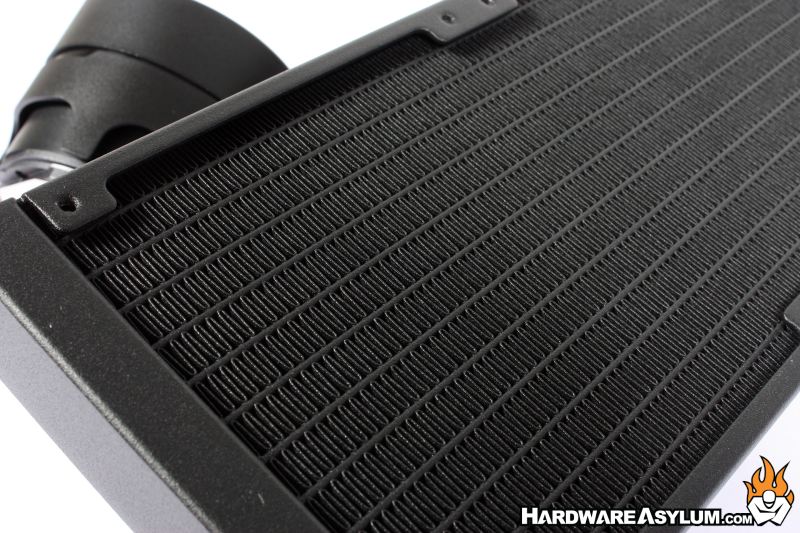
For the radiator the form factor is completely square and a little boring. In fact, it looks like most any AIO radiator, simple and yet functional. Fin density is extremely good reminding me of many Cooler Master designs that required high pressure fans to work efficiently. When it comes to cooling there are two touch points. First where the water meets the cold plate and Second where the water meets the air. Poor load temps will occur at the pumpblock if the water is struggling to pick up a thermal load. Poor thermal capacity will occur if the radiator cannot dump heat from the system. Proper fin density at the radiator ensures that noise is kept to a minimum and temperatures stay in check.
Maybe one of the most unique features of the LevelPlay CL360 is the pumpblock. According to their website this is a next gen jet stream pump design. “Powered by jet impingement tech, this pump blasts high-velocity fluid straight onto the cold plate for maximum heat transfer. The result? Relentless cooling power, rock-solid durability, and whisper-quiet operation, even when your system’s under heavy fire. “
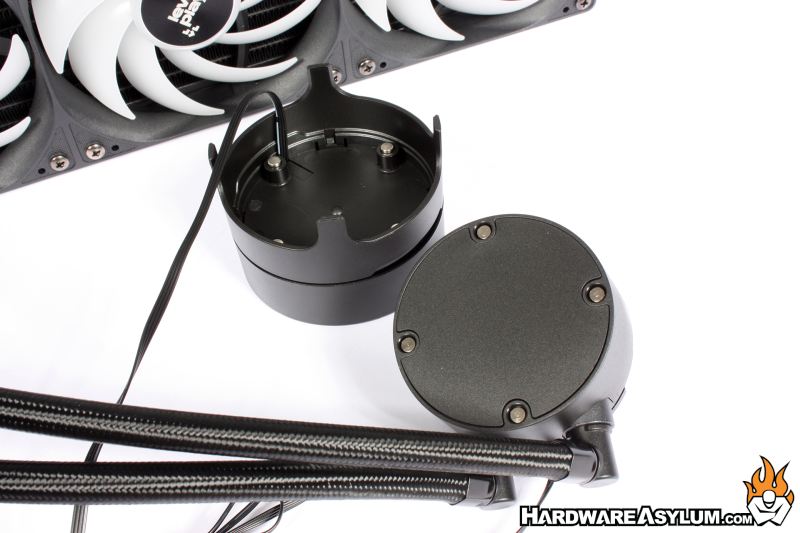
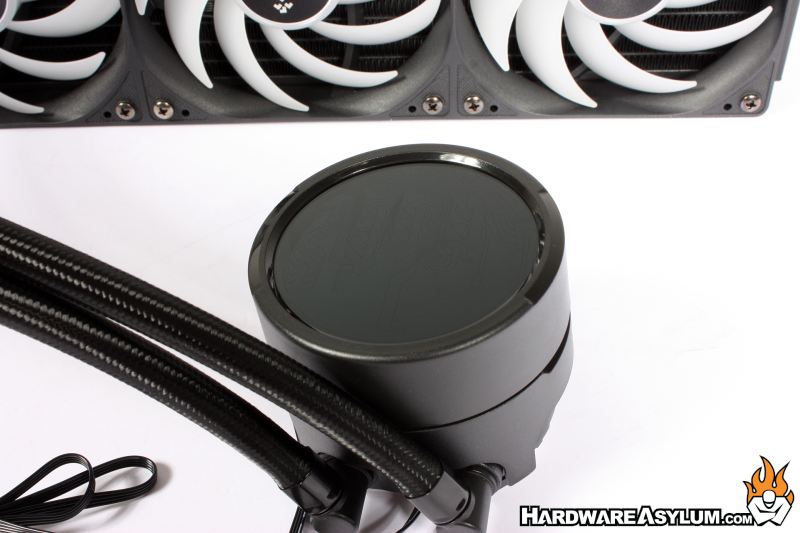
Jet impingement was a cornerstone design in the early watercooling days that used pump head pressure to accelerate water through tiny jets to forcefully remove heat from the cold plate. This didn’t require any complex machine work and was one of the top performing designs of the era. Modern AIOs do the same thing but trade the small jets for a microfin design. The inlet is still shaped but will use superior surface area to their advantage.
The pump top is actually a removable USB enabled screen that can be repositioned in one of four orientations and held in place with magnets.
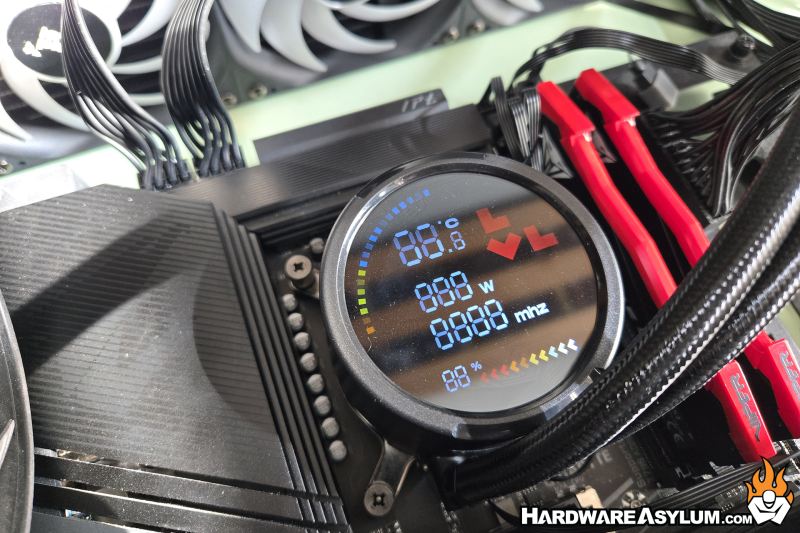
When the system is powered on but, doesn’t have the driver enabled the screen does into a self-check mode and will illuminate everything at once. Unlike some of the other coolers we have reviewed this one is very specific in what it will show so, while you won’t’ be able to watch your favorite anime you do get some rather helpful metrics from CPU temp, system load and frequency.
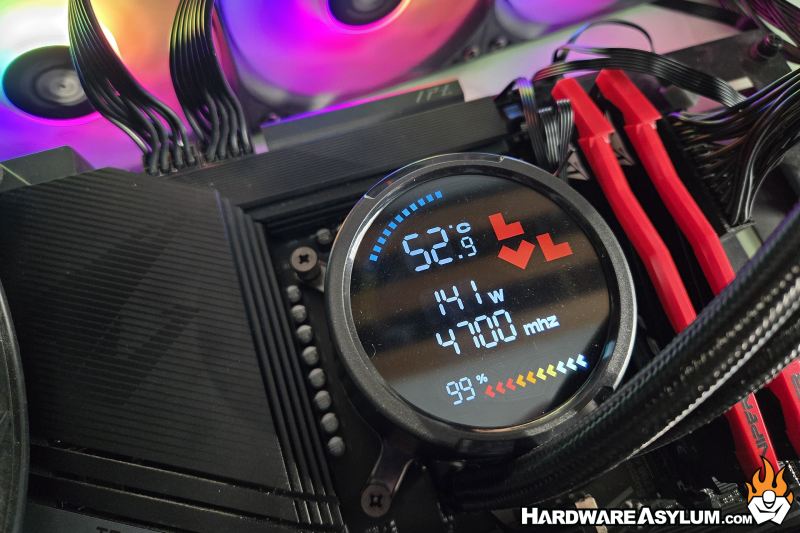
What surprised me the most is the rather accurate TDP calculation indicating just how much heat is being dumped into the cooler.