
MSI MPG X870I Edge Ti Evo WiFi Mini ITX Motherboard Review
Author: Dennis Garcia
Board Layout and Features
It has been a while since I last reviewed a Mini ITX motherboard and they impress me every time with how much you can include on such a small PCB. The overall layout is similar to the larger ATX designs with the I/O to the left, CPU in the middle and memory to the right. At the bottom you’ll find the single PCI Express expansion slot.
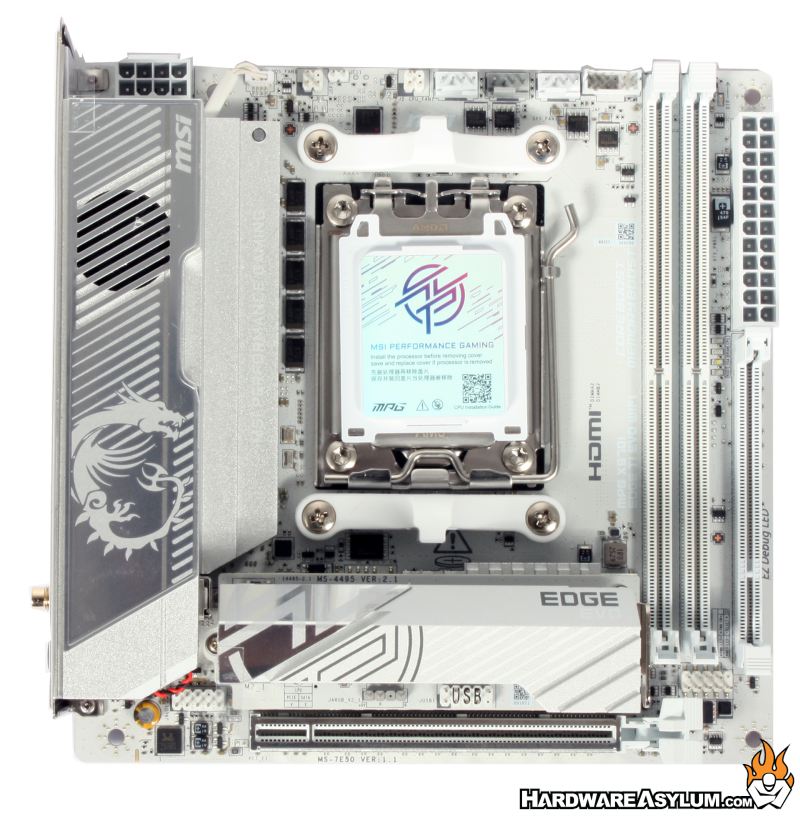
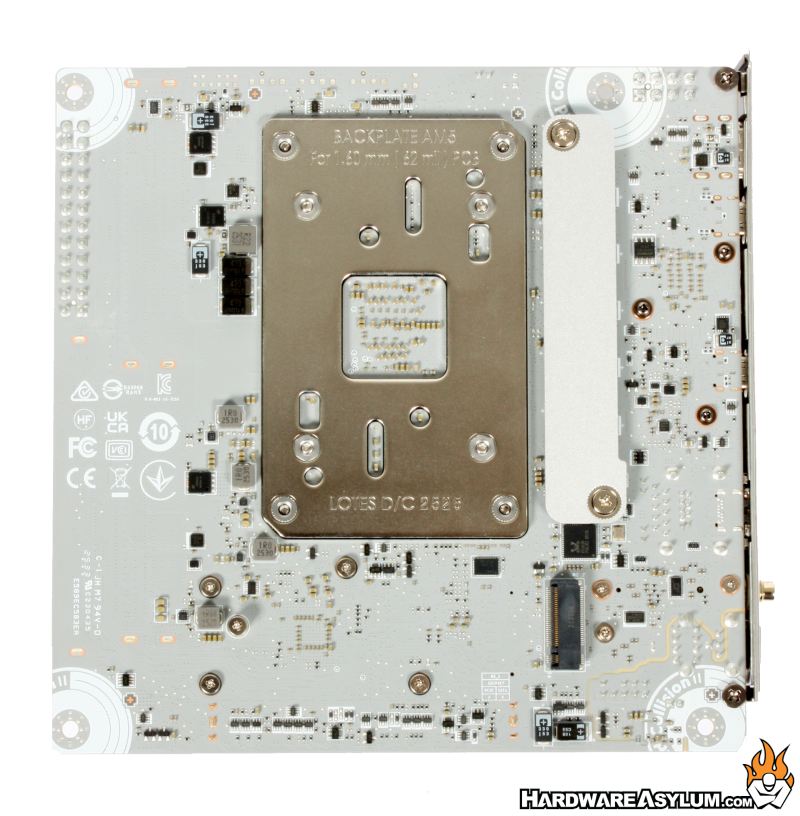
Flipping the motherboard over can tell you a lot about the overall construction however things get interesting on the smaller form factors. For instance, you rarely see through hole components because the designers will want to take advantage of the different PCB layers to provide more features in the limited footprint.
Overclockers have often gravitated to Mini ITX motherboards. While it may not seem logical at first but the smaller boards often force motherboard makers to implement more efficient designs which translate into less interference and more stable overclocks. Sadly, this only ever applies to memory overclocking and is one of the more popular types on modern hardware.
An important design limitation on Mini ITX motherboards is the smaller VRM. On the MPG X870i you will only find power components on the I/O side of the CPU socket and heat spreaders on both sides of the motherboard.
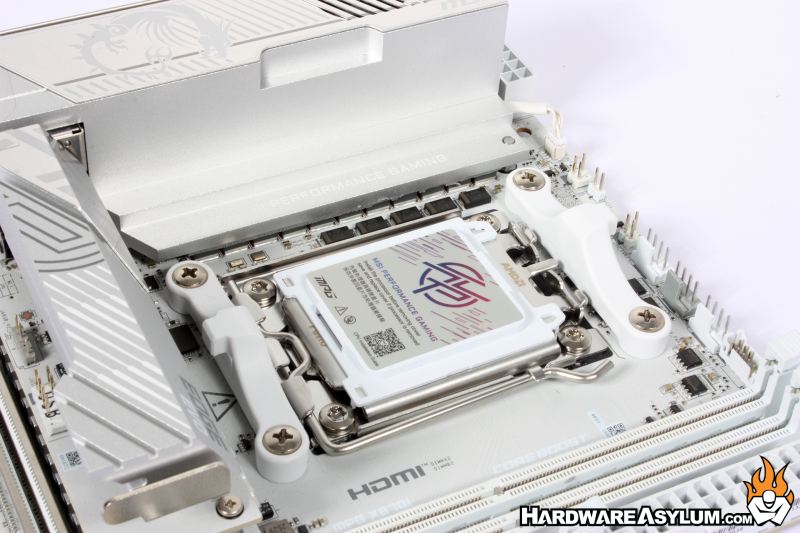
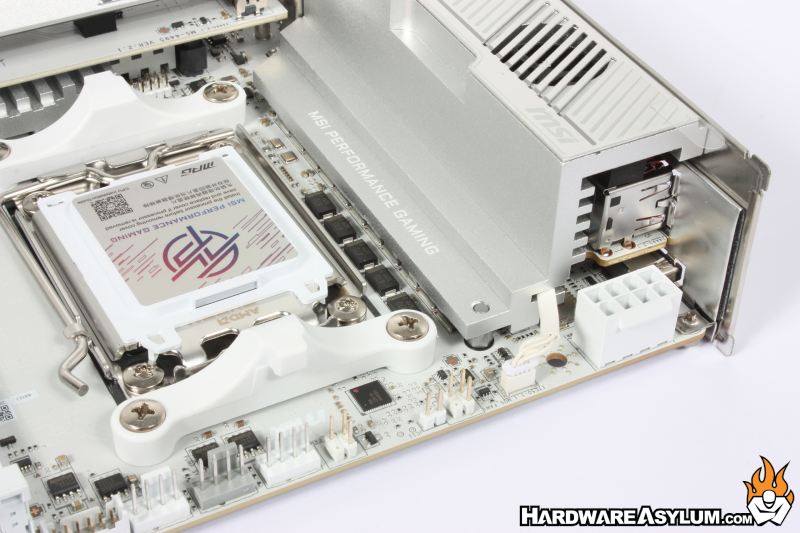
The CPU VRM is a Digital twin 8+2+1 design with a total of 11 VRM power phases with high performance thermal pads and almost exclusively hidden by the large VRM heatsink. To assist in keeping the VRM temperature under control there is a small fan located under the I/O cover.
The CPU socket is rather typical for the AM5 platform. Across the top and bottom of the socket you’ll find the heatsink retention brackets which almost always get removed when installing an aftermarket heatsink. What is nice about this configuration is that the backplate remains allowing you to secure everything into a factory part that is extremely strong.
CPU power is delivered by two dedicated 8-pin power sockets located behind the large VRM cooler. While access is tight there is still plenty of room to connect and remove the required cables.